You rent a pressure washer, spend your Saturday scrubbing the patio, and at first glance it looks better.
Then the concrete dries.
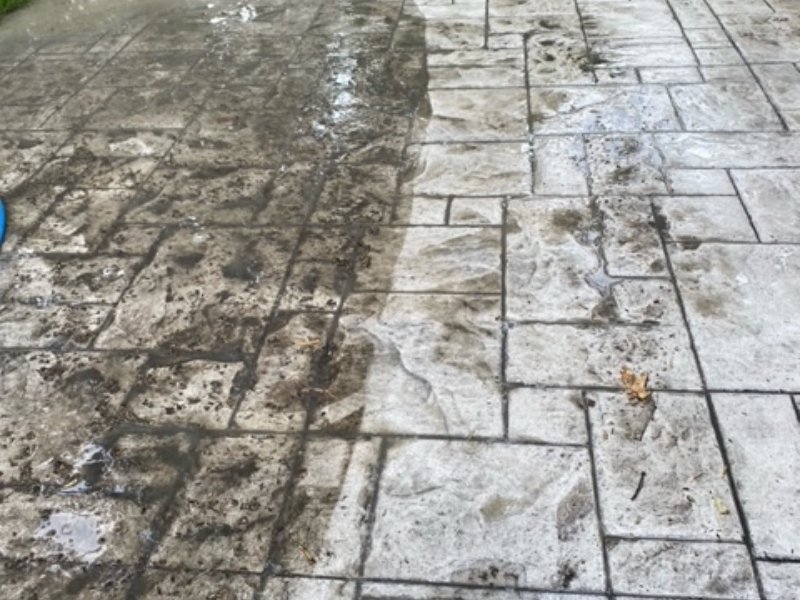
And suddenly, you see it: visible lines, uneven patches, and zebra-like striping across the surface. Somehow, the patio looks worse than when you started.
This frustrating problem is one of the most common complaints we hear from homeowners attempting DIY patio pressure washing.
At DeMark’s Window & Pressure Cleaning, we regularly help homeowners throughout Waukesha County, Lake Country, Milwaukee, Madison, and Southeastern Wisconsin fix streaking, uneven cleaning, and accidental surface damage caused by improper pressure washing techniques.
Below, we’ll explain why patio pressure washing leaves streaks and what professional cleaning does differently.
Quick Answer: Why Does Pressure Washing Leave Streaks?
Pressure washing streaks are usually caused by:
- Uneven pressure or wand movement
- Inconsistent spray overlap
- Incorrect spray tips
- Cleaning concrete without a professional surface cleaner
Most DIY pressure washers clean in narrow, uneven bands instead of evenly across the entire patio surface.
5 Common Causes of Pressure Washing Streaks on Patios
1. Uneven Wand Movement
Inconsistent movement is a top cause of striping. When homeowners:
- Move too slowly in one spot
- Overlap irregularly
- Pause in place
- Hold the wand at varying distances from the concrete
…the surface cleans unevenly, creating visible light and dark lines.
2. Using the Wrong Spray Tip
Different tips produce different spray patterns and pressure levels. Many DIY users accidentally choose:
- Overly aggressive tips
- Narrow spray angles
- Incorrect pressure settings
This can lead to streaking, etched concrete, permanent cleaning lines, or surface damage, especially on Wisconsin patios exposed to repeated freeze/thaw cycles.
3. Residential Pressure Washers Lack Professional Surface Cleaners
Most rented or homeowner-grade pressure washers rely on a single spray wand. Professional patio cleaning uses commercial surface cleaners that:
- Distribute pressure evenly
- Reduce or eliminate striping
- Clean larger areas consistently
- Prevent “zebra striping” across concrete
This is one of the biggest differences between DIY and professional results.
4. Cleaning Only Surface Dirt
Many homeowners are surprised when dark spots or algae quickly return after washing. That’s because pressure alone often removes surface dirt without fully treating:
- Algae and mildew
- Organic buildup
- Embedded grime
Professional exterior cleaning combines the right detergents, soft washing techniques when appropriate, and controlled pressure for a deeper clean.
5. Dirty Water Re-Drying on the Surface
As you clean, dirty runoff can dry back onto the patio, leaving:
- Streak marks and water lines
- Uneven coloration
- Dirty edges
Professionals use techniques to prevent runoff from drying unevenly across the surface.
Can DIY Pressure Washing Damage Concrete? Yes.
Pressure washing isn’t just about blasting water at high force. Too much pressure can:
- Etch concrete surfaces
- Leave permanent lines
- Damage decorative finishes Weaken aging concrete
- Remove protective sealants
This is especially critical for:
- Stamped concrete patios
- Decorative finishes
- Pool decks
- Older or weathered concrete surfaces
Restore Your Patio the Right Way
Your patio should look evenly cleaned, bright, and refreshed—not covered in streaks and pressure washing lines.
If your patio, porch, pool deck, or concrete surfaces need professional attention, DeMark’s Window & Pressure Cleaning provides expert patio pressure washing and exterior cleaning services throughout Waukesha County, Lake Country, Milwaukee, Madison, and Southeastern Wisconsin.
Get a fast, free quote today and see the DeMark’s difference.