property.
You may have it across the front of your home, wrapping the lower portion of your siding, around an entryway, chimney, landscape wall, or other architectural feature.
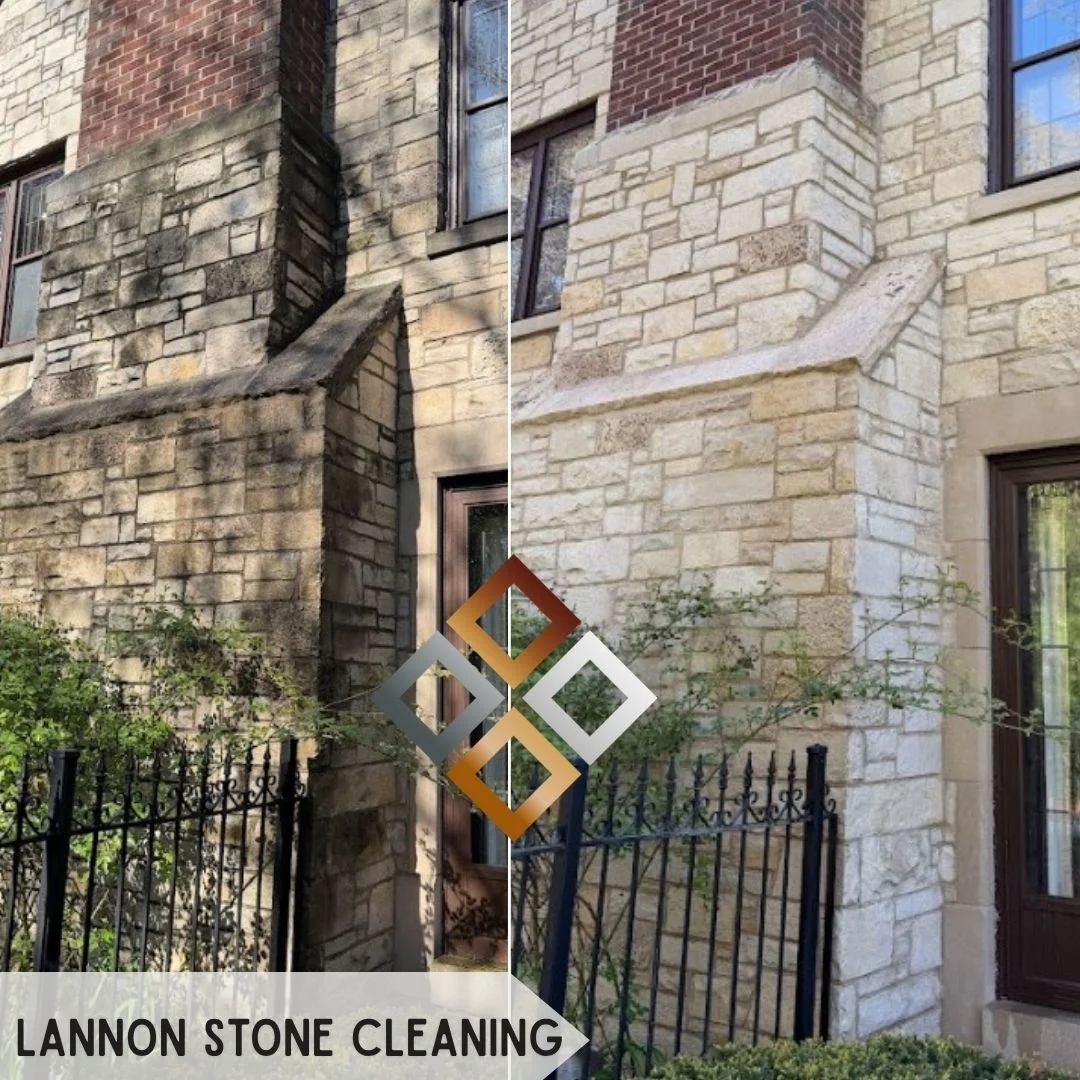
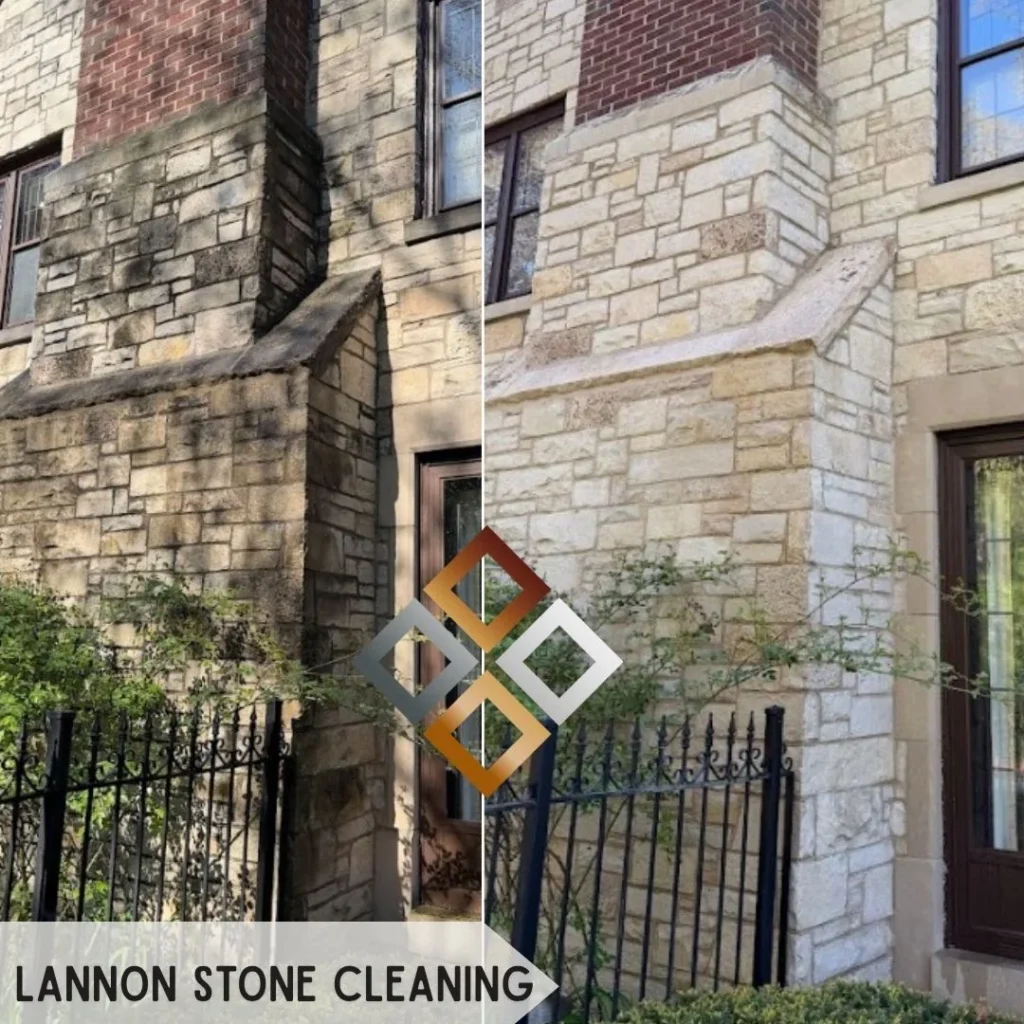
It’s a material that fits naturally with Wisconsin homes. But over time, that light-colored stone can become noticeably darker from dirt, algae, organic growth, environmental buildup, and years of exposure to Wisconsin weather.
And once Lannon stone gets dirty, cleaning it isn’t necessarily as simple as pointing a pressure washer at it.
What Is Lannon Stone?
Lannon stone has a particularly strong connection to our area. Despite commonly being referred to as limestone, Lannon stone is technically a type of dolomitic limestone or dolostone associated with the Lannon area of Waukesha County. Commercial quarrying in the area dates to the 1800s, and the stone eventually became widely used for homes, businesses, and architectural veneers throughout Southeastern Wisconsin and beyond.
The stone became so closely associated with the area that the name “Lannon stone” became synonymous with the locally quarried building stone. Today, you can still see it everywhere.
Drive through established neighborhoods in Elm Grove, Brookfield, Menomonee Falls, Sussex, Waukesha, Pewaukee, and Milwaukee, and you’ll find Lannon stone incorporated into homes of many different ages and styles.
Why Does Lannon Stone Get So Dirty?
Lannon stone is durable, but being outdoors year after year means it’s constantly exposed to the environment.