If you’ve noticed dark streaks, moss, or algae on your roof, you might wonder:
Could this affect my homeowners insurance?
It’s a fair question especially as insurance companies across Wisconsin continue tightening underwriting standards.
The short answer:
Yes, insurance companies in Wisconsin can choose not to renew a homeowners policy if they believe a roof’s condition increases risk.
But there’s more nuance to understand.
Let’s break it down clearly.
Cancellation vs. Nonrenewal in Wisconsin
When homeowners say their insurance was “canceled,” what often actually happened is nonrenewal.
In Wisconsin:
- Cancellation means a policy is terminated mid-term.
- Nonrenewal means the insurer decides not to renew the policy at the end of the policy period.
Insurance companies must provide advance written notice and a reason for nonrenewal. In many cases involving roofs, the concern falls under property conditions or maintenance risk.
Why Roof Condition Matters to Insurance Companies
Insurance is designed to cover sudden, accidental damage not gradual wear and tear.
From an underwriting perspective, a roof that appears:
- Worn
- Heavily stained
- Moss-covered
- Lifting or curling
- Near end-of-life
This may signal an increased likelihood of leaks, moisture damage, or future claims.
Even if the issue is cosmetic, heavy algae staining or moss growth can:
- Trap moisture
- Shorten shingle lifespan
- Accelerate deterioration
- Appear neglected in aerial or inspection photos
And today, many insurers use exterior inspections, drones, or satellite imagery when evaluating risk.
Sometimes homeowners are surprised to receive a notice based purely on the roof’s visible appearance.
Does “Dirty” Automatically Mean You’ll Lose Coverage?
No. Not every stained roof results in nonrenewal.
However, visible deterioration can trigger:
- A request for inspection
- A repair deadline
- Documentation requirements
- Or a nonrenewal notice if not addressed
This is especially relevant in Southeastern Wisconsin communities like Waukesha, Milwaukee, Madison, and surrounding areas where:
- Algae streaking is common
- Seasonal moisture impacts roofs
- Freeze/thaw cycles accelerate aging
A roof that simply needs cleaning may appear to underwrite as a roof nearing failure.This is where proactive maintenance matters.
The Difference Between Cosmetic Staining and Structural Damage
This is important. Most black streaks on asphalt shingles are caused by algae — not structural failure.
However, from street view or aerial imagery, heavy staining can resemble advanced aging.
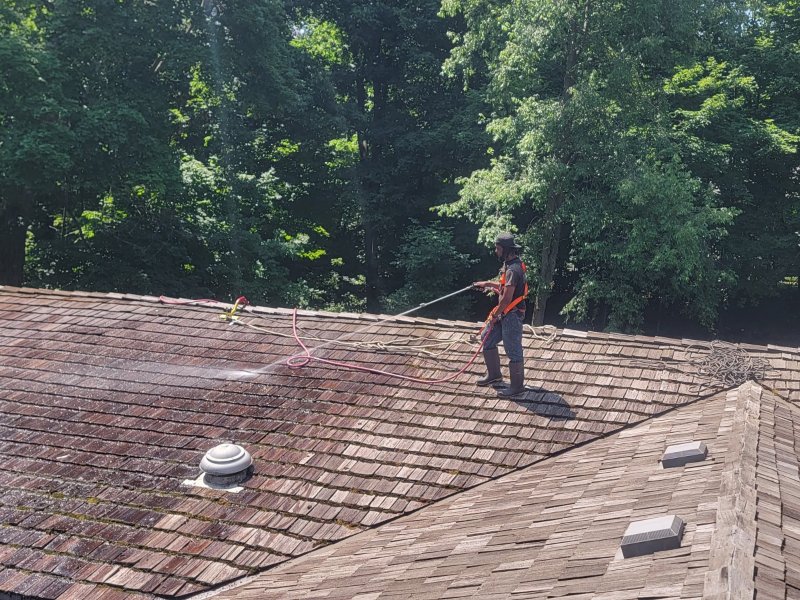
Professional roof soft washing:
- Removes algae safely
- Restores the roof’s appearance
- Helps extend shingle life
- Prevents moisture retention
- Improves curb appeal
- Reduces underwriting red flags
This is not pressure washing. It’s a controlled, low-pressure soft washing process designed specifically for roofing materials.
Prevention Is Easier Than Reaction
Waiting until you receive an insurance notice creates:
- Time pressure
- Stress
- Potential policy gaps
Proactive roof maintenance is often far less expensive and far less stressful than scrambling to replace a roof prematurely due to underwriting concerns.
For homeowners in Southeastern Wisconsin, regular exterior maintenance isn’t just about curb appeal.
It’s about protecting:
- Your home’s structure
- Your insurability
- Your long-term investment
Frequently Asked Questions
Can insurance companies cancel mid-policy for a dirty roof?
In most cases, roof-related concerns lead to nonrenewal at the end of the term rather than immediate cancellation.
How much notice do insurers give in Wisconsin?
Carriers must provide advance written notice explaining the reason for nonrenewal.
What if my roof is structurally fine but looks stained?
Documentation and professional cleaning can often resolve cosmetic concerns before they escalate into underwriting issues.
Final Thoughts for Wisconsin Homeowners
Yes, insurance companies in Wisconsin can choose not to renew coverage based on roof condition.
But that doesn’t mean every stained roof is uninsurable.
The key is understanding the difference between:
- Cosmetic algae staining
- True deterioration
- And how the roof appears during underwriting review
Being proactive protects both your home and your coverage.